Affiliate disclosure: This guide contains affiliate links. If you purchase through these links, SimTuts earns a small commission at no extra cost to you. We only recommend products we genuinely believe improve the flight sim experience.
Your first aircraft purchase in MSFS 2024 career mode comes at a steep one-time discount. Your second one does not. If you don't understand what that means before you start buying planes, you're going to waste hundreds of thousands of credits and spend the next thirty hours digging yourself out of a hole.
This guide is the aircraft progression plan. It covers what to buy, when to buy it, and the handful of planes you should avoid entirely. If you're still figuring out how career mode works, start with the main career mode guide. If you're trying to understand why you're always broke, the money guide covers that. This guide assumes you understand the basics and you're ready to make smart purchase decisions.
The First-Aircraft Discount: Career Mode's Most Important Mechanic
When you start your first company, your very first aircraft purchase comes at a steep discount — steep enough that the aircraft everyone buys with it, a used Cessna 172, costs 25,950 credits instead of the hundreds of thousands a replacement would. This isn't subtle — it's the single biggest financial advantage you'll get in the entire career mode, and misusing it will set you back enormously.
Get the arithmetic right, because it's easy to talk yourself into the wrong number here. A brand-new Cessna 172 Skyhawk lists at 499,800 credits. The discount is not applied to that: the deal everyone actually takes is a used C172, and after the first-aircraft discount it comes out at 25,950 credits. That's a functional cargo and ferry aircraft for less than the Jet Engine Rating costs.
But here's the trap most new players fall into: they sell it.
If you sell your discounted C172, used replacements on the marketplace start at 250,000+ credits. You just turned a 25,950 credit investment into a 250,000+ credit problem. That's close to a soft-lock for early-game players who don't have that kind of cash lying around.
Rule number one: never sell your first plane. It's the cheapest aircraft you'll ever own, and it generates income from day one. Even when you've moved on to turboprops and jets, that little 172 can still fly crew missions and generate passive income.
Don't Waste the Discount on Flightseeing
This is the second part of the trap. A Flightseeing company licence costs 1,000 credits. A Cargo company licence costs 10,000 credits. Many new players think "I'll start cheap with Flightseeing, get my feet wet." Sounds reasonable. It's not.
The discount applies to your first aircraft in your first company, once. A Flightseeing licence is 1,000 credits — basically free. But a Cargo licence is 10,000 credits, and Cargo missions are where the real money is. If you blow that one-time discount on a Flightseeing company, you'll eventually need to start a Cargo company anyway, and you'll be buying your next aircraft at full price.
Start Cargo. Use the discount on the C172. Thank me later.
Company Licence Costs
Before we talk aircraft, you need to understand what companies cost to start. These are one-time licence fees, and they're the buy-in only — they don't include the aircraft:
| Company Type | Licence Cost |
|---|---|
| Flightseeing | 1,000 |
| Cargo | 10,000 |
| Skydive | 20,000 |
| Charter Service (Private + VIP) | 25,000 |
| Aerial Advertising | 35,000 |
| Search and Rescue | 40,000 |
| Medevac | 50,000 |
| Agricultural | 70,000 |
| Firefighting | 100,000 |
| Passenger Transport | 150,000 |
| Aerial Construction | 200,000 |
Notice the jump. Getting into Passenger operations costs 150,000 just for the licence — before you've bought a single aircraft. And that aircraft is going to cost millions. This is why the progression path matters so much: you need to build wealth with cheaper operations before you can afford the expensive ones.
Certification Costs: What You'll Spend Before You Buy Anything
Aircraft purchases are the big-ticket items, but certifications quietly drain your account if you're not strategic about the order you get them:
| Certification | Cost |
|---|---|
| PPL | 2,000 |
| CPL | 2,500 |
| Night Rating | 7,500 |
| Instrument Rating | 10,000 |
| Tailwheel | 5,000 |
| High Performance | 5,000 |
| Multi-Engine | 15,000 |
| Turboprop | 20,000 |
| Jet Engine | 30,000 |
| ATPL | 40,000 |
| Turboprop Airline | 50,000 |
| Jet Airline | 100,000 |
| Heavy Airliner | 250,000 |
Those are the fixed-wing certifications you're most likely to buy, and they come to 537,000 credits between them. They are not the whole list — there's also the Scoop Endorsement (15,000) if you want the firefighting aircraft, and a separate rotorcraft ladder (Rotorcraft CPL 3,500, Turbine 7,500, Hoist 12,500, Hook 25,000, Rotorcraft ATPL 75,000) if you fly helicopters.
You don't need everything at once. Get your PPL (2,000) and CPL (2,500) first — they're mandatory. Then prioritise based on what you're actually flying. Don't grab Jet Engine (30,000) when you can't afford a jet.
Specialization Unlock Levels
You can't just buy any company whenever you want. Specializations gate on level — and level is only one of the gates. Most of them also want specific certifications and a tally of previously-flown missions at a given score, plus the specialization's Golden Mission. Here are the ones on the main money path, with what they actually ask for:
| Specialization | Level | Also requires |
|---|---|---|
| Ferry | 3 | CPL |
| Flightseeing | 5 | CPL |
| Skydive | 8 | CPL, 5 missions at C+, 3 landings over 50% smoothness |
| Cargo Light | 10 | CPL, 7 missions at C+, 5 landings over 50% smoothness |
| Charter Private | 16 | Instrument Rating |
| Cargo Medium | 25 | Instrument Rating, Turboprop Rating, 5 cargo missions |
| Charter VIP | 45 | Instrument + Turboprop Rating, 10 Private Charter missions at B+ |
| Passenger Airliner | 50 | Jet ATPL, 20 full-ATC missions, 15 passenger missions at A+ |
That's a path, not the whole board — Aerial Advertising opens at 12, Search and Rescue at 12 (rotorcraft) and 20 (airplane), Medevac at 35, Agricultural at 40, Aerial Construction at 50, and the helicopter specializations run on their own ladder. So the stretch between Cargo Light and Cargo Medium isn't the dead zone people describe; it's just that most of what opens in it doesn't pay as well as getting to level 25 does.
The certification requirements are the part that catches people out. Note that Cargo Medium needs the Instrument Rating (10,000) on top of the Turboprop Rating — budget for both, or you'll hit level 25 and find you still can't buy in.
The Aircraft Progression That Actually Works
Here's the step-by-step path from zero to a fleet that pays for itself. Every aircraft recommendation is based on purchase price, earning potential, and how quickly it breaks even.
Phase 1: Employee Mode (Levels 1-10)
You start with 5,000 credits. That's enough for your PPL (2,000) and CPL (2,500), with 500 left over. You're broke. That's fine.
Fly as an employee. You don't own an aircraft, you don't pay for fuel or maintenance, and you earn a steady income. This phase is about building cash and experience points, not about buying things.
Target: 35,950 credits before your first company purchase — 10,000 for the Cargo licence and 25,950 for the discounted C172. That is the exact floor, not a comfortable number, and the game checks it: you can't buy a company unless you can also afford the first aircraft in it. Save to around 40,000 so you've got something left for fuel and the first maintenance bill.
Phase 2: Your First Company (Levels 10-25)
Start a Cargo company (10,000). Buy the discounted C172 (25,950). You're now a business owner with a functional light cargo aircraft and hopefully a few thousand credits in reserve.
Fly light cargo missions, and don't skip flight phases. This mechanic changed in Sim Update 6 (August 2026): the old "No Skip Bonus" was replaced with a "Skip Cost" on the mission reward screen, and the calculation changed with it. The direction of travel is the same — skipping costs you money — but any specific percentage you read from before SU6, including on older guides and forum threads, is describing a system that no longer exists. Skipping the descent has always been the expensive one; taxi, takeoff and parking skips were comparatively cheap under the old system. See the money guide for how to work the current one. The C172 pays for itself within a couple of hours of flying regardless. Everything after that is profit.
During this phase, start saving for the certifications you'll need later. The Instrument Rating (10,000) is the one to prioritise — it gates Charter and Cargo Medium, which is where you're heading. Turboprop (20,000) is the other must-have, and it also unlocks the 208B and PC-12. Get Tailwheel (5,000) if you want the Draco X, and High Performance (5,000) for aircraft like the C400 TT and the Bonanza G36.
Phase 3: The Turboprop Jump (Levels 25-45)
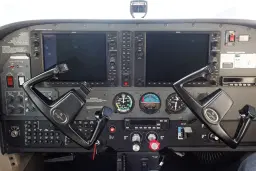
This is where career mode opens up. You've unlocked Cargo Medium at level 25, and you need a bigger aircraft. It's also where your physical hardware starts to matter. A basic joystick got you through the C172 phase, but turboprops and jets benefit from a proper yoke or sidestick. A Honeycomb Alpha yoke paired with a Honeycomb Bravo throttle gives you dual levers, a gear switch, flap controls, and a trim wheel — all things you'll use constantly as your fleet grows. For Airbus operators, the Thrustmaster TCA Officer Pack is the Airbus-specific equivalent. For the full hardware comparison, see the best hardware guide.
One caveat before the numbers: Asobo rebalances career pricing in sim updates, and the community price surveys everyone quotes were taken around Sim Update 4. Two sim updates have shipped since. Treat every figure below as the right order of magnitude and check the actual marketplace price in your own save before you commit.
Your targets:
C208B Grand Caravan (~4M used, ~4.8M new) — This is the workhorse that bridges the gap between single-engine piston flying and serious commercial operations. It carries more cargo, flies faster, and unlocks medium cargo missions, whose base payouts run into the high hundreds of thousands and commonly clear a million once the bad-weather and performance bonuses land. Those payouts are transformative. A few good medium cargo runs and you've covered the purchase price. Two things to know: it handles poorly on the ground, and it overtorques and overheats more easily than anything you've flown so far.
After the Grand Caravan, your next step depends on your cash situation:
PC-24 (~6.5M used) — The best all-rounder in this bracket, and the one to aim for if you can get it. Two catches. First, it isn't in the base game — the PC-24 ships with the Premium edition or as a standalone purchase, so check you actually own it before you plan around it. Second, it has a known fuel-burn bug (bind "Add Fuel Quantity" as a workaround), and Xbox players report throttle problems on controller.
PC-12 (~5.5M used) — Cheaper than the PC-24, in the base game, and genuinely fast at 290 KTAS. It comes with a known bug: do not fly it above FL200 or missions can fail. File FL180 and carry extra fuel. If you can live with that ceiling, it's the sensible pick.
CJ4 — SU4 rebalanced the economy and the CJ4 dropped to roughly a quarter of what it cost in SU3 (a community economy thread on the MSFS forums). It's a legitimate option for charter work now, whereas before it was overpriced for what it earned.
Phase 4: Fleet Building and Passive Income (Levels 45+)
Once you've got a couple of capable aircraft, you can start thinking about fleet operations. Set Assign Pilot to On for aircraft you own and they'll generate income while you fly something else.
Understand the limit before you build around it: a crewed aircraft only earns while you are actively flying a mission. It is not offline income. Close the sim and the fleet earns nothing; sit in Free Flight and it earns nothing. It is a multiplier on the hours you personally put in, not a substitute for them.
The economics vary sharply by aircraft. Returns run on a sliding scale from roughly 2.2% of purchase price per flight hour at the cheap end down to about 0.7% at the expensive end:
- Small aircraft (C172, Draco X, C400 TT): Around 2.2% per hour, which is a break-even of about 46 flight hours. That's the fastest payback in the game.
- Grand Caravan: Measured at roughly 1.5% per hour. Longer break-even, higher absolute earnings.
- 737 MAX: Earns 718,432 credits per hour passively — the highest rate of any aircraft — but that's only about 0.7% of its ~99M purchase price, so payback runs to roughly 137 flight hours.
The math is clear: small planes break even fastest. If your goal is passive income efficiency, a fleet of cheap aircraft outperforms a single expensive one. But if you want to fly the big stuff yourself while your fleet earns in the background, a mix of small passive-income planes and one or two premium aircraft you personally fly is the sweet spot.
One critical detail: crew aircraft accumulate wear. They need maintenance just like aircraft you fly yourself. Factor that into your profitability calculations, because a crew plane you never maintain is a crew plane that's going to cost you a fortune when its parts hit "Out of Order" status.
For the full breakdown, see the passive income guide.
Phase 5: Endgame (Level 50+)
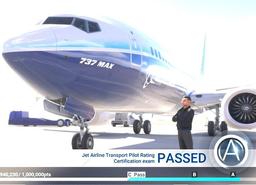
At level 50 you unlock Passenger Airliner specialization. The 737 MAX costs ~99M credits. If that sounds like a lot, it is. But by the time you're level 50, you should have a fleet generating passive income and enough experience to evaluate whether the investment makes sense for your operation.
The Longitude is worth mentioning here. In SU3 it cost 34,500,000; after the SU4 rebalance players reported it at 6-7M (a community economy thread on the MSFS forums). That's a big enough drop to make it a viable stepping stone between turboprops and the 737 — but it's an SU4-era figure, so check the current price in your save.
Note also that the airliner end of career mode has widened considerably since this guide first went up. Sim Update 5 brought the Heavy and Oversized tiers into career, and the A310, A320neo, A321LR, A330, A400M and Beluga all now appear in career missions. The 737 MAX is no longer the only airliner in town.
Best Aircraft by Specialization
Here's the quick reference for the main money-path categories — this is the progression spine, not every specialization in the game:
| Specialization | Progression |
|---|---|
| Ferry / Flightseeing | C172, then Bonanza G36 |
| Cargo Light | C172, then C208B Grand Caravan |
| Cargo Medium | C208B, then PC-12, then PC-24 |
| Charter Private | Vision Jet G2, then CJ4 |
| Charter VIP | PC-24 or CJ4 |
| Passenger Airliner | A310, then 737 MAX (the Heavy Airliner Rating was a locked, unreleased certification until Sim Update 5 made the Heavy and Oversized certifications available in career) |
Notice the C172 and C208B appear multiple times. They're not exciting, but they're the backbone of a profitable operation. Resist the urge to skip them.
Get flight sim tips in your inbox
New guides, checklists, and tips — no spam. Unsubscribe any time.
Aircraft to Avoid
Not every aircraft in the marketplace is worth buying. Some are overpriced for what they earn, some have bugs, and some just don't have enough job availability to justify the investment:
- ES-30 — Low payouts for what it costs, limited mission availability, and a list of career-specific problems (failures at start and boarding, a battery workaround needed after takeoff, a partially-implemented G3000 that forgets its settings between flights). Your money is better spent elsewhere.
- Saab 340 — Same story: payouts are low for the cost, routes are limited compared to a real airliner, and it has its own history of start and boarding failures. It also has no VNAV, so you plan descents by hand.
- King Air 350i — Looks like a sensible turboprop upgrade on paper. In practice it costs more than a PC-24 for less range and less speed, the yaw damper is inoperative, it has no working engine instruments, and it overtorques easily.
- The two large helicopters (Boeing CH-47D Chinook, Erickson S-64F SkyCrane) — Unless you specifically want to run Aerial Construction or hook work and you've done the maths, these are money pits. The missions exist, but the operating costs are brutal.
If an aircraft isn't on the recommended progression list above, test it before you buy it. Fly a few jobs in something similar, run the ROI calculation from the best aircraft guide, and make sure the numbers work before committing.
Maintenance: The Hidden Fleet Killer
Every aircraft needs maintenance every 25 flight hours. This applies to your personal aircraft and your crew-operated fleet. The costs vary by component and aircraft type, but the key thing to understand is the escalation mechanic.
Parts have condition levels. As long as a part is above "Out of Order" status, the maintenance cost stays relatively consistent. But once a part degrades to "Out of Order," the repair cost jumps significantly. Don't let parts get there.
Two reference points for scale. A 737 MAX engine repair was reported by players in the SU3 era at 5-11M credits per engine — that number is old and nobody has published a confirmed post-SU6 figure, but the order of magnitude is the point. At the other end, washing an aircraft costs 600 credits and repainting costs around 19,992 — and both are currently cosmetic only. Repainting refreshes worn paint; it does not let you change livery, and in community testing it had no measurable effect on passenger satisfaction. Spend on parts, not paint.
That 737 engine number is not a typo. A single engine repair can cost more than most players' entire net worth when they first start eyeing the 737. This is why the 737's 718,432 credits per hour passive income sounds impressive until you realize a bad landing or deferred maintenance can wipe out dozens of hours of earnings in one repair bill.
One piece of good news from Sim Update 6: career mode can now detect some mission failures that were never your fault — WASM problems, bad aircraft configuration after a Skip or Back-on-Track, airport surface issues — and when it does, you no longer eat the score reduction, reputation loss or the aircraft wear that would have needed repairing. Aborting a mission also now pays out partially based on how far you got, rather than nothing.
Important tip: Don't delegate maintenance blindly. When you open the maintenance screen, drill down to specific parts rather than hitting the "fix everything" button. Delegated maintenance wastes money by replacing parts that don't need replacing yet. Check each system individually and only repair what's actually degraded.
Insurance: Costs You're Probably Not Tracking
Insurance is charged on the aircraft you personally fly — not your entire fleet. Your crew-operated planes don't incur insurance costs, which is one reason passive income is more profitable than it might first appear.
Your reputation tier affects insurance premiums:
- S-tier reputation: 25% discount
- A-tier reputation: 20% discount
The premium itself is charged per flight hour and scales with the aircraft you're insuring, so there is no single "insurance number" to quote. On a light aircraft the middle coverage tier lands somewhere around 6,000 credits per flight hour; players flying airliners report bills an order of magnitude larger. Work it out for the aircraft in front of you rather than budgeting from someone else's figure.
The community advice is to buy top-tier coverage early anyway. You only pay for hours you personally fly, the discount at S-tier is real money on a long mission, and one uninsured write-off early in a career costs more than months of premiums.
A couple of known bugs to watch for: insurance costs were reported compounding rather than resetting (a forum report since marked resolved), and the highest coverage tier has been reported displaying 0% coverage. If something looks wrong with your insurance costs, it might actually be wrong. Check the forums for the latest known issues before assuming you've miscalculated.
The Full Progression Checklist
Here's everything in order, from your first credit to a self-sustaining fleet:
- Start in employee mode. Fly jobs, earn credits, build XP. Target 35,950 credits minimum before starting a company — save to 40,000 for a buffer.
- Get PPL (2,000) and CPL (2,500) first. Everything else can wait.
- Start a Cargo company (10,000). Not Flightseeing. Cargo.
- Buy the discounted used C172 (25,950). Never sell it.
- Fly light cargo. Don't skip flight phases — especially not the descent. Build cash steadily.
- Get Tailwheel (5,000) and High Performance (5,000) endorsements as you can afford them.
- Buy the Instrument Rating (10,000) and Turboprop certification (20,000) — you need both for Cargo Medium — then the C208B Grand Caravan (~4M used).
- Unlock Cargo Medium at level 25. Medium cargo base payouts run into the high hundreds of thousands and clear a million with bonuses. This is where real wealth building starts.
- Upgrade to PC-12 (~5.5M), PC-24 (~6.5M, Premium edition only) or CJ4 for charter and VIP work as those specializations unlock.
- Build a passive income fleet. Small aircraft first for fastest break-even. Maintain them regularly.
- Save for the 737 MAX (~99M) if passenger airline operations are your goal. This is endgame content.
Final Thoughts
The players who do well in career mode are the ones who treat it like an actual business. Every purchase is an investment, every aircraft either earns its keep or gets cut, and the boring early-game grind in a C172 is what funds the exciting late-game flying in a 737.
Don't rush it. Don't sell your discounted first plane. Don't buy aircraft because they look cool in the marketplace. Run the numbers, follow the progression, and let compound growth do its thing.
And if you want to go deeper on any of these topics:
- Career Mode Guide — licences, checkrides, career paths, and the full progression from student pilot to ATPL
- Best Aircraft Guide — ROI calculations, which planes to buy at each licence level, and the fleet-building framework
- Money Guide — the Skip Cost, freelancing tips, and how to stop haemorrhaging credits
- Passive Income Guide — crew operations and building a fleet that earns while you fly