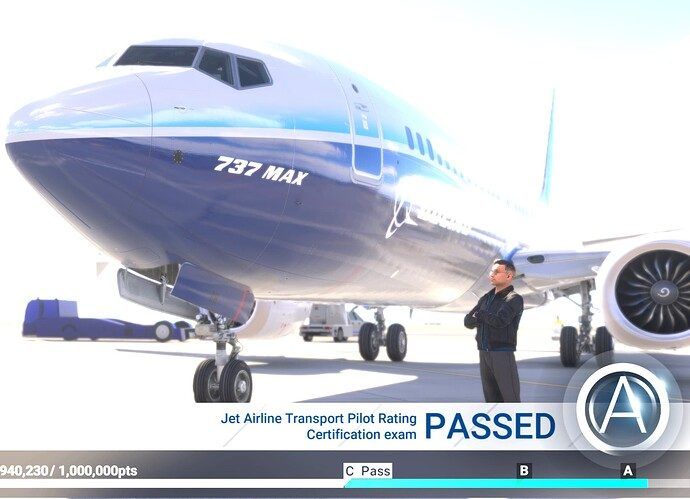
Short answer: Career mode starts you as a student pilot flying missions for other companies to earn credits and licences. Pass checkrides to unlock ratings — commercial, instrument, multi-engine, airline — then found your own company, buy aircraft, hire crews and take contracts. Progression is licence-gated, so you cannot skip ahead by spending.
Affiliate disclosure: This guide contains affiliate links. If you purchase through these links, SimTuts earns a small commission at no extra cost to you. We only recommend products we genuinely believe improve the flight sim experience.
You bought MSFS 2024 expecting to fly a 747 across the Atlantic. Instead, you're sitting in a Cessna 152 on a grass strip in Montana, staring at a greyed-out cargo run to Missoula. Something about a licence you don't have. Your bank balance is circling the drain. You crashed once already and the repair bill nearly wiped you out.
Yeah. Welcome to career mode.
It's the best thing they've ever added to this sim, and I'll die on that hill. But the game does a terrible job explaining itself, the early economy is brutal, and there are about fifteen different ways to accidentally go bankrupt. This guide covers everything you need to know to get through it without going broke or rage-quitting.
What Career Mode Actually Is
Think of it as a flight sim RPG. You've got a character with stats (licences, ratings, reputation), an economy (money for fuel, aircraft, repairs), and a progression path that drags you from buzzing around VFR in a single-engine prop to commanding airliners on instrument approaches in terrible weather.
What makes it different from just flying around is that stuff actually matters. Land hard? You're paying for repairs. Run out of fuel? Mission failed. Accept a job you can't handle? Your reputation tanks. And that's exactly why it feels so good when you nail a tricky mission you would've botched a week earlier.
Career mode shipped with MSFS 2024 in November 2024. It shipped broken, let's be real — but it's been patched a lot since and it's in a much better state now.
Is Career Mode Still Worth It in 2026?
Short answer: yes — and it's in far better shape than at the rocky November 2024 launch. The current state, as of 2026:
- Still actively patched. Asobo has shipped several sim updates tuning the career economy, fixing mission triggers, and improving stability.
- Aircraft leasing still doesn't exist. It's one of the most-requested features, but you cannot lease or rent planes — the only way to fly an aircraft you don't own is Employee Mode (covered below).
- Only default (Asobo) aircraft can be flown in career mode. Third-party add-on aircraft still aren't selectable here, even if you own them.
- The early economy is still deliberately tight. The money grind is the single biggest thing new players bounce off — which is most of what this guide is about.
If career mode put you off at launch, it's worth another look.
The Licence Progression
Career mode loosely mirrors real-world aviation licensing. Each licence opens up new job types and aircraft. You can't skip ahead, and honestly you wouldn't want to — each level builds skills you'll desperately need for the next one.
Starting Out (Unlicensed)
Everyone starts here as an unlicensed pilot. You get basic VFR privileges — single-engine piston aircraft, fair weather only, simple sightseeing flights and short hops. It feels restrictive and honestly it is.
Don't rush past this. I know it's tempting to grind through the early missions as fast as possible, but this is where you learn to actually fly: takeoffs, landings, visual navigation, traffic patterns. If you can't consistently land a 152 without bouncing it off the tarmac, you're absolutely not ready for what's coming.
Private Pilot Licence (PPL)
Your first real milestone (2,000 credits). The PPL opens up a wider job selection, new aircraft like the C172 and Robin DR400, and lets you fly in more interesting conditions. You earn it through training missions and a checkride.
What it unlocks:
- Multi-leg cross-country flights
- More complex single-engine aircraft
- Access to basic mission types beyond sightseeing
The checkride:
It's a circuit. Takeoff, fly the pattern, land. That's it. Don't overthink it — if you can fly a clean traffic pattern and put it down without bouncing, you'll pass. The real value of the PPL isn't the test, it's the jobs it opens up.
Commercial Pilot Licence (CPL)
The CPL (2,500 credits) is your business licence. You're now allowed to fly for hire (within the game's logic), the jobs get more interesting, aircraft get bigger, money gets better.
What it unlocks:
- Commercial charter operations
- Cargo hauling with larger aircraft
- Bush flying contracts with serious payouts
- Aerial work — survey flights, photography missions
Instrument Rating (IR)
The IR (10,000 credits) requires the CPL. This is the one that actually teaches you something new. It lets you fly in IMC — clouds, fog, low visibility, properly awful weather. Before earning your IR, career mode locks you into preset weather conditions. After the IR, you get live weather — and you'll hit days where VFR flying just isn't possible. No IR means no work on those days, and no work means no money.
What it unlocks:
- IFR flight plans
- Jobs in poor weather
- Higher-paying routes that require weather reliability
The checkride:
It's a single instrument approach in IMC. You fly the approach, break out of the clouds, land. No holding patterns, no complex ATC work — just follow the guidance down. The checkride itself won't give you much trouble.
But here's the thing — the IR is the one licence where what comes after genuinely requires the skill. VFR flying is intuitive. Instrument flying isn't. The first time you're in solid cloud at 3,000 feet trying to brief an approach plate while configuring the aircraft, it feels completely different from anything you've done before. The checkride won't prepare you for that. If you've never flown an ILS or RNAV approach, go practice in free flight. The training missions help, but the real learning happens when you're doing IFR cargo runs in actual weather and things aren't going to plan.
Note that multi-engine and turboprop aircraft require separate ratings (Multi-Engine Rating, Turboprop Engine Rating, etc.) — the CPL alone doesn't unlock them. Check the certification tree in your career menu.
The checkride itself:
Honestly? The CPL checkride is pretty easy. It's basically another flight — no trick questions, no complex manoeuvres. If you can handle the IR checkride, the CPL is a breeze. Don't overthink it or put it off.
The real challenge at CPL level isn't the test — it's what comes after. The jobs you unlock are harder. Clients are less forgiving, weather creates real problems, and the aircraft demand more of your attention. But the money is noticeably better, and there's something satisfying about feeling like a professional pilot instead of a student fumbling through pattern work.
Airline Transport Pilot Licence (ATPL)
Top of the mountain.
What it unlocks:
- Airline operations (scheduled passenger flights)
- Access to the airliner tier — though the 737 MAX specifically requires the Jet ATP Rating (100,000 credits) on top of the base ATPL (40,000 credits)
- The highest-paying contracts in the game
- Multi-crew operations
The checkride:
Like the CPL, the actual ATPL checkride isn't the hard part — it's a flight in a jet. The hard part is that jets fly nothing like props. Way more energy to manage, much faster everything, and you'll be relying heavily on the FMS and autopilot. If you've never touched a 737 cockpit before, spend some time in free flight first. The checkride won't kill you, but the adjustment from turboprops to jets is real.
Licence Progression Summary
| Certification | Cost | Typical Hours | Aircraft Access | Job Types | Income |
|---|---|---|---|---|---|
| Unlicensed | — | Starting point | Basic single-engine | Sightseeing, short hops (+ Employee Mode) | Very low |
| PPL | 2,000 cr | 5-10 hrs | Advanced single-engine (C172, DR400) | Cross-country, more mission types | Low |
| CPL | 2,500 cr | +10-20 hrs | Bigger / complex aircraft | Paid commercial work: charter, cargo, bush, aerial | Medium |
| IR | 10,000 cr | +10-20 hrs | IFR-capable aircraft | All-weather / IFR routes | Medium-High |
| ATPL | 40,000 cr | 40+ hrs | Jets, airliners (+ Jet ATP Rating 100,000 cr) | Airlines, heavy cargo, multi-crew | High |
Multi-engine and turboprop aircraft need their own separate ratings on top of these.
These are rough estimates. Your mileage will vary depending on how quickly you pick things up and how efficiently you grind between checkrides.
Job and Mission Types in Career Mode
Career mode generates contracts from a handful of recurring job types. Which ones appear depends on your certifications and the aircraft you own:
- Sightseeing / discovery flights — short VFR scenic loops; the bread-and-butter of the unlicensed and PPL stage.
- Passenger transport — point-to-point passenger runs that scale from light singles up to airliners as you progress.
- Cargo / freight — haul goods between airports; weight and distance drive the payout. Comes into its own with a CPL and a Caravan.
- Ferry flights — reposition an aircraft from A to B. Simple, steady, low-drama income.
- Supply / humanitarian runs — deliveries to remote or rough strips; heavy overlap with bush flying.
- Aerial work — survey, photography and similar specialist contracts.
- VIP / executive charter — higher-paying passenger work once you're into business turboprops and jets.
You won't see the lucrative contracts until your licences and fleet support them — which is exactly why rushing licences without the skills (or the right aircraft) just leaves you staring at jobs you can't accept.
Career Paths and Specializations
Once you've got your CPL (and ideally your IR), career mode branches out. You don't have to pick just one path, but specializing builds reputation faster in your chosen field, which means better-paying jobs sooner.
Bush Flying
Bush flying is the most fun you'll have in this game. Fight me on that.
It sends you to remote airstrips, backcountry strips, and places where the "runway" is a dirt patch on a hillside. The scenery is incredible, every landing feels like an accomplishment, and there's a tension to it that other career paths just don't have.
What makes it special:
- Short, unprepared runways (sometimes <1,000 feet)
- Mountainous terrain with tricky approaches
- Weight-critical loads where you genuinely have to calculate if you can take off
- Beautiful, remote locations you'd never visit otherwise
Best aircraft: Anything with STOL capability. The CubCrafters XCub, DHC-2 Beaver, and Draco X are all brilliant for this. Early on, a Cessna 172 works in a pinch — I used one for longer than I'd like to admit.
Profitability: Middling. Individual payouts are decent but flights are short, so your hourly rate isn't great. You're not doing this for the money. You're doing it because landing a Beaver on a 1,500-foot strip at 6,000 feet elevation with a crosswind is the best feeling in the sim. I've spent entire evenings just hopping between strips in Alaska and British Columbia, completely ignoring whatever mission I was supposed to be doing. The scenery alone is worth it, but the flying is what keeps you there.
Charter Operations
You're a taxi service in the sky. Passengers want A to B, comfortably and on time.
Charter work is all about smooth flying, punctuality, and passenger comfort scores. If you like consistency and steady progression, this is your lane.
What makes it special:
- Passenger satisfaction matters — smooth landings, no turbulence-seeking
- Schedule pressure on some jobs
- Good variety of destinations
- Reputation builds with repeat "clients"
Best aircraft: Turboprops are the sweet spot. The King Air 350i or Pilatus PC-12 — fast enough to cover distance, comfortable for passengers, economical enough to profit.
Profitability: Medium-high. Consistent income once you build reputation. Pays better than cargo per hour.
Cargo Operations
Honestly, just use cargo.
I'm only half joking. If charter is a taxi, cargo is a delivery van. Nobody cares if the ride is smooth. Get the goods there on time, intact, done. No passenger comfort scores, no fussy clients complaining about turbulence. Don't let that fool you though — tight schedules, heavy loads, and sometimes truly filthy weather make it demanding in its own way.
The catch is that weight management actually matters — heavy loads tank your climb and landing performance, margins per mile are tighter than charter, and you're expected to fly in weather that would ground passenger ops. Night flying is standard. It's the blue-collar path and I mean that as a compliment.
For aircraft, twin-engine workhorses are your bread and butter. The Cessna 208 Caravan for medium cargo and eventually the King Air 350i when you're ready for serious hauling. You make it up in volume — cargo is steady, reliable work with less downtime, and it's the best path for building cash quickly in the mid-game. Which is why I keep recommending it.
Airline Operations
The endgame for a lot of players. Scheduled routes, jet aircraft, hundreds of passengers. It's the most structured path and by far the most lucrative, but also the most demanding and the most expensive to get into — jets cost a fortune to buy and bleed credits on fuel and upkeep if you fly them half-empty.
You get structured route networks with actual schedules, complex aircraft systems (FMS, autopilot, TCAS, the works), and multi-leg operations where you fly several sectors in a single session. The 737 MAX is the primary airliner in career mode, with the A310-300 and 747-8 also available to purchase since SU4 (Sim Update 5 unlocked all Heavy aircraft specializations).
The money is by far the best in the game, but the upfront investment in licences and aircraft access is huge. You need to have spent serious time in the sim before this path even makes financial sense.
Which Path Should You Choose?
If you want money, do cargo. If you want fun, do bush. If you want both, alternate between them. Airlines pay the best but cost the most to get into, and charter is the safe middle ground if you don't want to think too hard about it.
My actual advice? Dabble in everything until something clicks, then lean into it. Career mode doesn't punish you for trying different paths. It punishes you for accepting jobs you can't complete. Big difference.
Money Management
Here's the uncomfortable truth: you will be broke for a while. The early game economy is tight. You earn peanuts, and one daft mistake can wipe out hours of progress. Understanding the money side is just as important as understanding the flying.
Your Starting Budget
You begin with a modest number of credits and a basic aircraft. Enough for the first few missions, not much more — and note you can't take paid contracts until you've earned your CPL, so the very early game is really about getting licensed (fly in Employee Mode if you need to build hours and a little capital while broke). Priority number one is building a credit cushion so a single bad landing doesn't end your career before it starts.
How You Earn Money
Every completed job pays you. Amount depends on:
- Distance — longer flights, more money
- Complexity — IFR pays more than VFR
- Cargo/passengers — more weight or more passengers, more cash
- Reputation bonus — higher rep in a category gives you a multiplier
- Performance bonus — good scores on landing quality, navigation accuracy, etc. add a meaningful bonus
That performance bonus is not trivial. A clean mission can pay 20-30% more than a sloppy one. Good flying isn't just good practice — it's good business. For the full breakdown of career mode economics, see the money guide.
Flying Planes You Don't Own (and Buying Your First Aircraft)
A lot of forum posts talk about "leasing" or "renting" aircraft in career mode. Let's kill that myth: there is no aircraft leasing or rental system in MSFS 2024 career mode. It's been one of the most-requested features since launch, but as of 2026 it still isn't in the game. Don't build your early plan around it.
What does exist is Employee Mode. Before you can afford your own plane, you can fly missions in aircraft you don't own by working for an existing operator. The catch is the commission — the employer keeps the lion's share of the fee and you walk away with a small cut. So it's a way to build hours, reputation and a little starting capital while you're broke, not a way to get rich. Lean on it early, then graduate off it as soon as you can buy.
Buying aircraft is how you actually progress. Planes are bought outright with credits — there are no recurring payments, but you own every repair bill. A few things new players get wrong:
- Your first aircraft purchase is discounted — spend it on something you'll fly constantly (the C172, or the Cessna 208 Caravan once you've got the ratings), not a novelty.
- Don't sell your starter aircraft. It's cheap to run and there's always low-end work to fall back on.
- Only default (Asobo) aircraft can be used in career mode. (For which planes are actually worth buying and when, see the best aircraft guide.)
When to buy your first aircraft:
- You've earned your CPL (you can't take paid contracts without it)
- At least 20-30 completed missions under your belt
- <3 incidents or crashes on your record
- Enough credits to buy the aircraft AND keep a 30-50% reserve
Repair Costs: The Career Killer
New players never see this coming. Damage your aircraft — hard landing, runway excursion, gear-up landing, outright crash — and you pay for repairs. Repairs are expensive. A bad landing in a Cessna might cost a few hundred. A gear-up landing in a King Air? Tens of thousands. Ask me how I know.
Landing a Bonanza in a 20-knot crosswind you have no business attempting will cost you more in repairs than your last five missions earned. Happens more than you'd think.
Bottom line: don't crash. And if you're not confident with a particular aircraft or approach, practice it in free flight first. Ten minutes of practice saves thousands.
Repair Cost Estimates
| Incident | Approximate Cost | Career Impact |
|---|---|---|
| Hard landing (minor) | 200-500 credits | Small reputation hit |
| Hard landing (major) | 1,000-3,000 credits | Moderate reputation hit |
| Runway excursion | 2,000-5,000 credits | Significant reputation hit |
| Gear-up landing | 5,000-15,000 credits | Major reputation hit |
| Crash (total loss) | Full aircraft value | Devastating |
Numbers vary by aircraft type. Denting a 152 is a lot cheaper than denting a 737. But at every level, the financial pain is proportional.
The Hardware Honesty Check
Most preventable career-mode crashes happen because the player is trying to land on mouse-and-keyboard or with a gamepad's tiny sticks. The control inputs are too coarse — you over-correct, balloon the flare, drop in hard, and a "minor" hard landing wipes out half a day's earnings.
A basic joystick fixes it. The Logitech Extreme 3D Pro is the canonical entry pick — about £30, enough buttons and axes for everything career mode throws at you, and it pays for itself the first time it stops you bouncing a Bonanza off a runway. If you want a HOTAS bundle (joystick + throttle), the Thrustmaster T.Flight HOTAS 4 is around £60 and works on PC and PS5. For a step up with Hall-effect sensors that won't drift over time, the Thrustmaster T16000M FCS sits around £65.
If you're planning to lean into the airliner side of career mode (CPL → ATPL), see the airliner hardware guide — yokes, sidesticks, and throttle quadrants make a real difference once you're flying jets.
Best Early-Game Money Strategies
- Stick to short VFR flights. Low risk, builds both cash and reputation. Boring? A bit. Necessary? Absolutely.
- Sightseeing missions are gold. Forgiving scoring, decent payouts, and they're actually pleasant to fly.
- Stay away from night and IFR jobs until you're genuinely ready. The pay bump isn't worth the risk of a botched approach.
- Multi-leg jobs are your friend. Three short legs usually pays more than one longer flight — you get completion bonuses for each leg.
- Check the weather before accepting anything. Marginal conditions? Skip it. There's no penalty for passing on a job. There's a big penalty for failing one.
- Always keep a cash reserve. Never fly broke. Maintain enough for at least one repair and a few fuel stops.
Fuel Costs
Fuel is an ongoing expense that sneaks up on you. Larger aircraft burn dramatically more, and sloppy fuel planning eats your profits. Always calculate what you need for the mission plus reserves, and don't fill the tanks to the brim unless you actually need to. Extra fuel means extra weight means more fuel burned. It's a losing cycle.
Rule of thumb: carry enough for the planned flight plus 30-45 minutes of reserve. For VFR, 45 minutes is standard. For IFR, plan for an alternate airport and at least 45 minutes beyond that.
The Scoring and Reputation System
Career mode judges every flight. Your score drives your reputation, which drives what jobs you can access. Understanding the scoring lets you optimise your flying for maximum progression.
What Gets Scored
Landing Quality is the big one. The game measures your vertical speed at touchdown, centreline alignment, and how smoothly you transition from flying to rolling. Aim for under 200 fpm and you'll score well. Anything over 400 fpm counts as a hard landing and you'll start taking damage above 600. For context, real airline pilots typically touch down at 100-200 fpm. You don't need to grease every landing — just stay out of the "hard" category consistently.
Navigation Accuracy — did you follow the route? Hit your waypoints? Fly at assigned altitudes? For IFR flights especially, deviations from the published procedures cost points.
Flight Plan Adherence — right altitude at the right time, arrived within the expected window. Career mode gets surprisingly picky about this at higher licence levels.
Speed Control — flying too fast or slow for the phase of flight gets noticed. Busting the 250-knot limit below 10,000 feet is penalised.
Taxi and Ground Operations — yes, they score your taxi. Running off the taxiway, taxiing too fast, cutting across grass — it's a small part of your score but it adds up over time.
How Reputation Works
Reputation is tracked per career category — bush, charter, cargo, airline. Higher reputation unlocks better-paying, more challenging jobs. Goes up with good scores, goes down when you fail or perform poorly.
Once you start doing well, it snowballs. Good flying means better jobs, which means more money and better aircraft. But it works the other way too — a string of failures spirals fast.
Building reputation quickly:
- Take jobs slightly below your skill level — consistent "good" scores beat occasional "perfect" scores mixed with failures
- Complete every job you accept, full stop — a failed mission hurts more than a mediocre completion helps
- Focus on one or two categories at first rather than spreading thin
- Performance bonus stacks with reputation bonus — good flying pays double
The Reputation Trap
You can get stuck in a hole. Take on ambitious jobs, fail them, reputation drops, available jobs shrink, harder to earn reputation back. The recovery path is grinding easy missions, which is tedious but it works.
Avoidance strategy: never accept a job you're not at least 80% confident you can complete. If it requires skills you're still developing — instrument approaches in weather, short-field landings on mountain strips — go practice those in free flight first.
Get flight sim tips in your inbox
New guides, checklists, and tips — no spam. Unsubscribe any time.
Skills That Actually Matter
Career mode rewards the same skills real-world flying demands. Here's what matters most, with practial tips for each.
Takeoffs and Landings
Don't skim this section. Landing quality is the single biggest factor in your career scores. Consistently good landings are the difference between a career that grows and one that stagnates.
Takeoff technique:
- Full power before releasing brakes — don't roll onto the runway lazily adding power
- Track the centreline with rudder. Most single-engine props need right rudder on takeoff
- Rotate at the correct speed for your aircraft
- Climb at Vy until clear of obstacles
Landing technique:
- Stabilised approach by 500 feet AGL: correct speed, correct configuration, on glidepath
- Not stabilised by 500 feet? Go around. Not a suggestion.
- Aim for a specific touchdown point
- Flare gently — reduce power to idle, raise the nose slightly, let the aircraft settle
- Don't force it onto the runway. Let it land when it's ready.
The go-around is your best friend. Career mode doesn't penalise you for going around. It absolutely penalises you for a bad landing. If anything feels off on approach — too high, too fast, offline, gusty — go around. Every experienced pilot does this. Only inexperienced ones try to "save" a bad approach.
Navigation Without GPS
Some early missions require VFR navigation — finding your way with landmarks, VORs, and dead reckoning instead of the GPS magenta line. If you've never flown without GPS, this will be a shock.
Skills you need:
- Reading a sectional chart (or the in-game VFR map)
- Identifying landmarks — rivers, highways, towns, mountain ridges
- VOR navigation: tuning, identifying, tracking radials
- Dead reckoning: flying a heading for a calculated time
- Pilotage: looking outside and matching what you see to the chart
Try this in free flight: pick two airports 50nm apart, plan a VFR route using landmarks, fly it without touching the GPS. Do it three or four times. You'll be surprised how natural it becomes.
Weather Reading
Career mode throws variable weather at you, and once you've earned your IR and unlocked live weather, conditions can change with no warning. Learning to read conditions before accepting a job is essential.
Before every flight, check:
- Cloud ceiling — below 1,000 feet AGL means you need IFR or skip the job
- Visibility — below 3 statute miles is IMC, don't attempt it VFR
- Crosswind — if it exceeds your aircraft's demonstrated crosswind limit (typically 15-20 knots for small aircraft), pick a different job
- Turbulence — mountain areas and frontal systems make precision flying brutal
- Icing — temps near freezing plus visible moisture equals icing. Most small aircraft have no deicing kit. This will kill you.
Read the weather briefing. Every single time. Five seconds of checking saves you from a failed mission and a wrecked aircraft.
Fuel Planning
Running out of fuel in career mode is catastrophic. Mission failure, potential crash, insurance claim — the full disaster package. And it happens to players constantly because they just don't plan.
How to plan:
- Check your aircraft's fuel burn rate at cruise power
- Calculate flight time (distance divided by cruise speed, roughly)
- Add taxi fuel — 5-10 minutes at low power
- Add climb fuel — burn rate is 20-30% higher during climb
- Add reserves — 45 minutes minimum for VFR, more for IFR
- Compare total to tank capacity. Doesn't fit? You need a fuel stop.
Don't top off every time. Fuel has weight. A full-fuel 172 carries significantly less cargo or passengers than one with half tanks. In bush flying and cargo ops, this matters enormously. Calculate what you need, add reserve, stop there.
ATC Communication Basics
Career mode has AI ATC, and while it's more forgiving than real ATC or VATSIM, how you communicate still affects your scores.
Key phrases:
- Taxi clearance — request before moving. "Simtuts One-Two-Three, request taxi to runway two-seven."
- Takeoff clearance — hold short until cleared
- Position reports (VFR) — report when entering or transiting. "Ten miles south, inbound for landing."
- Approach requests (IFR) — "Request ILS runway two-seven."
You don't need the full ATC phraseology handbook memorised. The AI understands the basics and guides you through anything unusual. But using proper calls is part of what gets scored, so learning the fundamentals pays off.
Common Mistakes and How to Avoid Them
Some lessons in career mode are expensive. Here are the ones that cost players the most time and money.
1. Taking Jobs Beyond Your Skill Level
The job board shows everything available, including missions that are technically within your licence but way above your ability. Just because you can accept a mountain bush landing doesn't mean you should.
Be honest with yourself. Never landed on a 2,000-foot strip at 5,000 feet elevation in a crosswind? Go practice that specific scenario in free flight first.
2. Not Checking Weather
The most common expensive mistake. You accept a job, take off, and halfway there you fly into a cloud deck you can't get through because you're VFR-only. Now you're stuck — can't complete the mission, fuel's burning, and if you push through the weather, you're risking a crash.
Check the briefing for both departure and destination before accepting. Marginal conditions? Skip it. Another job will come along.
3. Ignoring Instrument Training
Players rush through the VFR licences and hit a brick wall at the Instrument Rating. IFR flying is a completely different discipline.
Start learning instrument basics early. Even while working on your PPL, practice flying under the hood — instruments only, no external reference. When you reach the IR checkride, you'll be glad you started months ahead.
4. Spending All Your Money on Aircraft
You save up, buy a shiny new aircraft, and then realise you can't afford fuel for the next mission. Or you have a minor incident and the repair bill bankrupts you.
Follow the 50% rule. Never spend more than half your credits on a single purchase. If you can't afford an aircraft with 50% of your money to spare, you can't afford it yet — keep flying what you already own (or take Employee Mode jobs) until you can.
5. Rushing Through Licences
Each licence builds on skills from the previous one. Grind through too fast without actually learning, and you'll reach a level where required competence exceeds your actual ability. Then you fail missions, lose reputation, and end up worse off than if you'd taken your time.
Treat each level as a genuine learning phase. Don't just complete the minimums — fly extra missions until the flying feels comfortable, not just possible.
6. Ignoring the Go-Around
Pilots at every level — real and simulated — have a dangerous tendency to try and salvage a bad approach. In career mode, a go-around costs you a few minutes of fuel. A bad landing costs hundreds or thousands and a reputation hit.
Set a personal rule. Not stabilised by 500 feet AGL? Go around. No exceptions. No "I can save this."
7. Not Using Checklists
MSFS 2024 has built-in checklists for every aircraft. Ignoring them is how you forget the gear, leave the mixture lean for takeoff, or miss a fuel tank switch.
Use them. Every time. They take a minute and prevent the kind of embarrassing disasters that ruin a session.
8. Flying Tired or Distracted
Real-world aviation principle that applies perfectly here. When you're tired or not fully engaged, you make mistakes. In free flight, those mistakes cost nothing. In career mode, they cost money and reputation.
If you're not in the right headspace, do something else in the sim. Free flight, scenery touring, whatever. Save career mode for when you can give it proper attention.
Tips for Getting Unstuck
Every career mode player hits a wall eventually. Can't pass a checkride, finances in a hole, stuck at a reputation level with only boring jobs available. Here's how to break through.
Practice in Free Flight
The single most useful piece of advice in this entire guide, and I'm going to keep hammering it.
Free flight has no consequences. You can practice landings, approaches, navigation, emergency procedures — all of it — without risking your career. Yet so many players never touch free flight once they start career mode.
Failing crosswind landings? Set up a crosswind scenario and do twenty. Struggling with ILS approaches? Fly ten with varying weather. The skill transfers directly.
Use the Training Missions
MSFS 2024's training missions cover specific skills. They're not amazing, but the instrument flying ones in particular are pretty well done — they walk you through IFR navigation, approach procedures, and instrument scanning in a structured way that free flight can't replicate.
Adjust the Difficulty
If you're stuck, you might be playing at the wrong difficulty. Career mode has assist options you can tweak without starting over:
- ATC assists — simplifies communication
- Navigation assists — adds VFR guidance
- Landing assists — visual approach guidance
- Flight assists — adjusts physics forgiveness
No shame in using these to learn. Turn them on, get a feel for how something should work, then gradually switch them off. Real student pilots use equivalent crutches before going solo.
The Financial Recovery Plan
If you've dug yourself into a hole — low cash, high repair bills, poor reputation — here's the recovery playbook:
- Stop taking risky jobs. Swallow your pride. Go back to easy, short VFR missions.
- Fly the cheapest aircraft you own (or take Employee Mode jobs). Minimise per-mission cost and risk.
- Perfect your scores. The performance bonus on easy jobs is still real money.
- Don't buy anything. Every credit goes into reserves.
- Grind 10-15 missions. Boring? Yes. Effective? Also yes.
- Gradually step up again once your cushion is healthy. Slightly harder jobs, but only when you're confident.
It feels like starting over, and honestly it kind of is. But it works. The players who recover are the ones who swallow their pride and accept the grind instead of doubling down on risky jobs and digging the hole deeper.
Community Resources
The MSFS community is massive and surprisingly helpful:
- MSFS Forums — dedicated career mode threads with tips, bug reports, and strategy discussion
- Reddit (r/MicrosoftFlightSim) — active community, good for quick questions
- YouTube — several creators cover career mode specifically, search "MSFS 2024 career mode" for current stuff
- Discord servers — lots of MSFS communities have career mode channels
Known Issues and Workarounds
Career mode launched buggy. Loads of issues have been fixed, but some persist.
Mission Triggers That Don't Fire
Sometimes a mission objective just won't trigger even when you've clearly completed it. Less common now than at launch, but it still happens.
If an objective seems stuck, make sure you're at the exact location specified — some triggers have tiny activation zones. Try cycling your gear or flaps (weirdly, this can kick a stuck trigger). If nothing works, you might need to abandon and retry. Frustrating, but sometimes there's no alternative.
No Mid-Flight Saves
Career mode has no native mid-flight save or autosave. If you disconnect, crash the sim, or need to quit mid-flight, that mission is lost. Career progress (licences, reputation, finances) saves to the cloud separately, so your career data survives even if you lose a flight — but the flight itself is gone. Plan accordingly: don't start a two-hour airline route if you might need to leave halfway through. Third-party save tools exist if this is a dealbreaker.
Performance Considerations
Career mode adds overhead to the base sim. If performance is suffering:
- Lower scenery detail in remote areas — bush flying can chug in dense photogrammetry zones
- Reduce AI traffic density (career mode generates extra traffic)
- Close career UI panels when not using them — the job board and map consume resources
- Size your rolling cache appropriately — at least 30-50 GB, since you'll visit tons of locations
Weather Sync Issues
Career mode's weather sometimes doesn't match the briefing. Usually a sync issue — weather can change between accepting a job and actually flying it, and sometimes it just flat out lies to you.
Always do your own visual weather assessment before commiting to an approach. If actual conditions are significantly worse than briefed, treat it as IFR (if you've got the rating) or divert.
Balancing Patches
Asobo has tweaked the economy and scoring several times since launch. Some early exploits (repeating certain high-paying routes) have been patched out. Some punishingly expensive things (like minor gear damage costing you a kidney) have been softened. Keep your sim updated.
A Realistic Career Mode Progression
Roughly what a typical journey looks like if you're playing a few sessions per week:
Weeks 1-2: Unlicensed → PPL Short VFR flights. Learning the economy. Getting comfortable with your starter aircraft. Focus on landing technique. Build a small cash reserve. Earn your PPL (2,000 credits) to unlock better missions and aircraft.
Weeks 3-5: CPL Cross-country flights, first night flights, commercial jobs open up. Fly a better aircraft in Employee Mode for specific jobs before committing capital to buy one. Cash flow should be positive and steady. Things start to feel like they're opening up.
Weeks 5-8: Instrument Rating The hard part. Lots of practice, lots of failed approaches, lots of learning. The IR (10,000 credits) requires the CPL. Progression slows while you develop IFR skills. Completely normal. Supplement with training missions and free flight. Don't get discouraged — everyone struggles here.
Weeks 8-12: ATPL and Beyond Where career mode gets really fun. You've got the skills for challenging jobs, the reputation for good contracts, and the financial stability to operate comfortably. Pick a specialisation. Work toward the ATPL (40,000 credits) and engine ratings to unlock jets.
Weeks 12+: ATPL and Beyond Airline ops, heavy jets, complex multi-leg routes. The endgame. At this point you understand the system and you're optimising for whatever you enjoy most.
This assumes you're actually learning as you go, not speedrunning. Some people will be faster, some slower. Point is, if you're not enjoying the flying you're doing it wrong.
Frequently Asked Questions
How does MSFS 2024 career mode work?
You start unlicensed with a small number of credits and a basic trainer. The early game is about earning certifications: your PPL first, then the CPL — the licence that actually lets you take paid contracts — followed by the Instrument Rating and aircraft-specific ratings that unlock progressively more lucrative missions. Until you can afford your own plane you can fly in Employee Mode (you keep only a small cut of the fee). You buy aircraft outright with credits, accept jobs, fly them end to end (skipped flight phases are deducted as a Skip Cost on the reward screen), and reinvest into more aircraft and ratings. The aircraft you can use, missions you can accept, and money you earn all scale with your progression.
What licences are there in MSFS 2024 career mode?
The core order is PPL (2,000 credits) → CPL (2,500) → Instrument Rating (10,000) → ATPL (40,000), plus a separate Jet ATP Rating (100,000) for airliners like the 737 MAX. Multi-engine and turboprop aircraft need their own separate ratings on top — the CPL alone doesn't unlock them — and after the PPL you can pursue ratings in whatever order suits the work you want. The CPL is the gate to paid commercial flying; the IR is the single biggest skill leap because it lets you fly in weather that would otherwise abort the mission.
What is the certification tree in MSFS 2024?
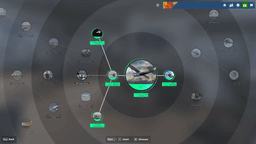
The certification tree shows every licence and rating in career mode and what unlocks each one. You progress by passing checkrides (in-sim flight exams) for each step. Some certifications require minimum flight hours; others require specific mission completions. The tree is non-linear after PPL — you can pursue helicopter ratings, multi-engine, instrument, or seaplane in different orders depending on the work you want to do.
What's the best career path in MSFS 2024?
Most efficient: PPL → CPL → Instrument Rating → turboprop work (Cessna 208 Caravan) → jet type ratings → ATPL. Get the CPL quickly — it's what unlocks paid contracts — then the IR, the biggest single ROI because every weather-affected mission becomes possible after it. The Caravan opens cargo and short-haul passenger work, the most consistently profitable phase before jets. Skipping ahead to airliners too early leaves you with operating costs you can't cover.
What are the best tips for MSFS 2024 career mode?
Three rules: (1) earn ratings before buying expensive aircraft — a King Air sitting idle costs more than the missions it unlocks, (2) chain missions geographically so you fly back to bases where the next job is waiting, (3) never skip mission steps; the Skip Cost is deducted straight from the payout, and the rating multiplier rewards thoroughness more than raw speed. Beyond that, fly to the conditions: take VFR-only jobs in clear weather, IFR jobs when you have the rating and the weather warrants it, and refuse anything you can't actually do reliably yet.
How do you make money fast in MSFS 2024 career mode?
The Cessna 172 Skyhawk and Cessna 208 Caravan are the two most profitable aircraft for the time you'll own them. Earn your CPL and Instrument Rating as fast as possible to open up Caravan cargo work. Avoid jets until you can consistently chain 4+ hours of flying without crashes or repairs — operating costs eat raw earnings if utilisation is low. Detailed economics in the Career Mode Best Aircraft guide and Money Guide.
Can you lease or rent aircraft in MSFS 2024 career mode?
No — there is no aircraft leasing or rental system in MSFS 2024 career mode, despite it being one of the most-requested features since launch. The only way to fly a plane you don't own is Employee Mode, where you fly missions for an existing operator and keep a small cut of the fee while they take the commission. To fly an aircraft as your own you buy it outright with credits — there are no recurring lease payments, but you own every repair bill. Only default (Asobo) aircraft can be used in career mode.
More Career Mode Guides
This guide covers the big picture, but there's a lot more detail in the companion guides:
- Career Mode Money Guide — company economics, the Skip Cost, when to expand, and how to stop haemorrhaging cash
- Best Aircraft Guide — ROI calculations, which planes to buy at each licence level, and the fleet-building framework that survives every patch
- Passive Income Guide — how crew operations actually work, the midnight UTC trick, and building a fleet that earns while you fly
Final Thoughts
MSFS 2024's career mode is rough around the edges. Bugs, weird design decisions, an economy that feels like it was balanced by someone who's never played their own game. But underneath the jank is something I keep coming back to: a flight sim that actually gives your flying consequences. Mess up and it costs you. Fly well and you progress. That loop is addictive once it clicks.
The people who actually enjoy it long-term treat it like real flying. They plan their flights, check the weather, know when to say no to a job. They don't try to skip ahead or take risks they can't afford. And when they finally nail that King Air ILS approach in 200-foot ceilings after months of building up to it, it hits different.
Take your time. Build your skills. Watch your money. Every career pilot in this game started where you are now — staring at a Cessna on a grass strip, wondering what the hell they're supposed to do next.