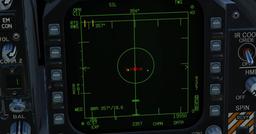
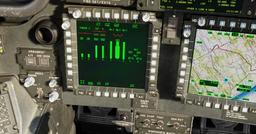
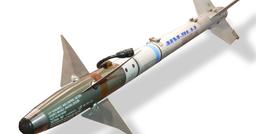
You're in a turning fight with a MiG-29. You had him—he was out of energy, nose low, you were about to gun him. Then you glanced at your airspeed for half a second.
Now you can't find him.
Your heart rate spikes. You're scanning everywhere—nothing. Where did he go? You roll wings level to get a better look and—
Fox 2. You're dead.
Welcome to the most important lesson in dogfighting: lose sight, lose the fight.
Affiliate disclosure: This guide contains affiliate links. If you purchase through these links, SimTuts earns a small commission at no extra cost to you. We only recommend products we genuinely believe improve the flight sim experience.
Why This Rule Exists
The phrase itself is a modern fighter-pilot training saying — it has no single attributable author, it just gets handed down through BFM training. The principle is as old as air combat. Oswald Boelcke wrote it into his Dicta Boelcke in June 1916, two years before the British and French issued tactical guides of their own: "you should always try to keep your eye on your opponent, and never let yourself be deceived by ruses." A century later, nothing has changed.
The reason is simple physics. A fighter aircraft can reposition dramatically in just a few seconds. At 400 knots, you're covering nearly 700 feet per second. If you lose sight for three seconds, your opponent has moved over 2,000 feet—and could now be anywhere in three-dimensional space around you.
Without visual contact, you cannot:
- Predict what maneuver they're executing
- Time your counter-maneuver correctly
- Know when they're achieving a firing solution
- Avoid flying into their weapons envelope
You're flying blind against an opponent who can see exactly what you're doing.
The Tally and No Joy Calls
Multi-service brevity defines two separate pairs of calls, and mixing them up is one of the most common mistakes in sim comms. The published definitions are:
- "Tally" — sighting of a target, non-friendly aircraft, or enemy position
- "No joy" — you do not have visual contact with the target or bandit (the opposite of tally)
- "Visual" — sighting of a friendly aircraft, ship or ground position
- "Blind" — no visual contact with a friendly (the opposite of visual)
So tally and no joy are about the bandit. Visual and blind are about your wingman. Calling "no joy" when you mean you've lost your flight lead is a real-world brevity error that gets repeated constantly on DCS servers.
These aren't casual status updates. They're survival information. When a wingman calls "no joy," it means they're vulnerable and need help. When you have tally on a bandit your wingman can't see, you become their eyes.
There's a related term worth knowing: "padlocked" means you cannot take your eyes off the aircraft without risking losing tally — which is exactly the state this whole guide is about staying in.
In DCS multiplayer, using these calls correctly transforms chaotic fights into coordinated engagements. A simple "Tally, bandit right 3 o'clock low" can save your wingman's life.
How to Maintain Tally
Keeping sight of an opponent through a high-G turning fight is genuinely difficult. The aircraft is moving through your field of view, often passing through canopy frames, behind your wing, or into sun glare. Here's how to keep them:
1. Move Your Head, Not Just Your Eyes
Your eyes have a narrow cone of sharp vision. In a turning fight, the bandit might be anywhere in a 180-degree arc behind you. You need to physically turn your head—crane your neck, look over your shoulder, use every degree of head movement you have.
In VR, this is natural. With TrackIR, make sure your curves allow full range of motion. With a flat screen, you'll need to use hat switches or padlock views—but understand their limitations.
2. Use Reference Points
When the bandit passes behind a canopy frame or under your nose, don't just wait and hope. Note their position relative to a reference:
- "He's passing under my lift vector"
- "He's about to appear past the left canopy bow"
- "He should come out from under my wing in two seconds"
This mental tracking lets you predict where to look when they reappear.
3. Keep the Fight in Front of You
Easier said than done, but a core BFM principle is to keep your lift vector on or ahead of the bandit. This keeps them in your forward hemisphere where they're easier to track. If they're constantly at your 6 o'clock, you've already lost the geometry—and you're about to lose sight.
4. Beware the Instrument Trap
The deadliest habit is checking your instruments during a merge. That airspeed indicator, that altitude readout, that radar display—none of it matters if you're about to eat a missile.
In a visual fight, fly by feel. In the aircraft that have an AOA indexer, it sits in the forward field of view rather than buried in the panel, precisely so you never have to look down for it. Buffet, the indexer and the seat of your pants will tell you if you're about to depart. The bandit won't tell you when he's about to shoot.
5. Use the Sun and Clouds Deliberately
If you're losing sight of the bandit in sun glare, they're probably doing it on purpose. Experienced fighters use the sun—dragging the fight so you have to look into it while they can see you clearly.
Counter this by maneuvering to change the geometry. Pull the fight to put the sun at your back instead. If clouds are breaking up the visual, use them yourself—but never fly into a cloud when you've lost tally. You'll come out with no idea where the threat is.
What To Do When You Lose Sight
It will happen. Even the best pilots lose tally sometimes. What you do in the next three seconds determines whether you survive.
Immediate Actions
-
Assume the worst. If you can't see them, assume they're at your six o'clock, in parameters, about to shoot. This assumption keeps you alive.
-
Break hard. Don't fly straight and level while searching. "Break" is brevity for an immediate maximum-performance turn in the called direction, and that's what this is. It won't magically defeat a missile — nothing does on its own — but it forces any shot already in the air to pull for a solution it may not have, and it changes your position unpredictably while you look.
-
Dispense countermeasures. Drop flares. If there's any chance an IR missile is tracking you, flares now. You can always get more flares; you can't get more aircraft.
-
Call it out. "No joy, defensive!" tells your wingman you need help. They might have the tally and can talk your eyes onto the bandit.
-
Unload and extend. If you've truly lost the fight—no tally, no wingman support, defensive—sometimes the right answer is to unload to zero G, accelerate, and extend away. Live to fight again.
The Search Pattern
When searching for a lost bandit:
- Check six o'clock first. Always.
- Then high. Fighters love to go vertical.
- Then low. They might have dove for the deck.
- Scan systematically—don't just dart your eyes randomly.
If you have radar, use it—but don't stare at the scope. Quick glances only. The radar can help you find them, but your eyes need to confirm and track.
Get flight sim tips in your inbox
New guides, checklists, and tips. No spam. Unsubscribe any time.
Why This Is Hard in DCS
The simulation environment creates unique challenges for visual tracking:
Monitor Limitations
A flat screen shows perhaps 60-90 degrees of field of view. A human head, sitting still, takes in roughly 200 degrees horizontally once you count the monocular periphery of each eye. That gap is enormous. On a monitor, bandits constantly leave your screen and you have to use hat switches to pan around — which is why many virtual pilots lean on padlock views, and why they struggle the moment padlock isn't available or isn't holding the aircraft they wanted.
The fix: Learn to use snap views to check six. Snap views are on by default in DCS but come bound to no keys at all, so you have to set them up yourself in the controls menu before they're any use. Make padlock a crutch, not a dependency. Practice with labels off to build real scanning habits.
TrackIR Curves
Aggressive TrackIR curves can make small head movements swing your view too fast, or make it hard to check your true six. Spend time tuning your curves for combat—you need the full range of motion, smoothly.
VR Advantages (and Traps)
VR provides the most natural visual tracking, but it has traps. Some pilots get target fixation—staring at the bandit while their energy state, velocity vector and altitude quietly go to pieces. You still have to fly the aircraft.
Leaning, though, is not a trap — it's a technique. Both VR headsets and TrackIR 5 are 6DoF trackers, so leaning sideways genuinely does move your virtual head and genuinely does let you see around a canopy bow. The limit is that DCS bounds how far your head can travel (the limits_6DOF block in each module's Views.lua) so you can't lean out through the canopy. Lean freely; just know there's a wall, and that a 3DoF tracker gives you none of it.
The Labels Debate
DCS labels make visual tracking trivially easy. Whether you get them is set by the mission and the server, not just your own options — a mission can force a label setting on you, and if it doesn't, your own preference applies. Competitive servers generally run them off or dot-only. If you always fly with labels, you're not developing the fundamental skill this entire guide is about.
Recommendation: practice in unlabeled environments regularly. Even if you mostly fly labeled servers, the habit of real scanning will make you better when it counts.
The First Tally Advantage
In any merge, the pilot who achieves "first tally" has a significant advantage. If you see them before they see you, you can:
- Choose when and how to engage
- Set up the geometry in your favor
- Potentially achieve a kill before they even know you're there
This is why situational awareness before the merge matters so much. Use your radar. Use AWACS. Use your wingman's eyes. The fight often is decided before the first turn.
But once the merge happens and you're in the visual arena, only your eyes matter. Radar is too slow. Datalink is too imprecise. You and the bandit are now playing a game of three-dimensional chess at 500 knots, and the only way to play is to never take your eyes off them.
Training the Skill
Like any skill, visual tracking improves with deliberate practice:
1. Fly Without Labels
Even if it's frustrating at first. Even if you lose fights you "should" have won. The habit of scanning, predicting, and tracking needs to be developed without the crutch.
2. Practice Defensive BFM
Set up training missions where you start defensive—bandit at your six, you need to reverse. This forces constant tally maintenance in the hardest conditions.
3. Fly with a Wingman
The mutual support of two-ship tactics is built on shared visual tracking. "I've got tally, you're clear to engage." "No joy on the trailer, keep your head on a swivel." This communication becomes second nature.
4. Review Your Tracks
DCS track files let you review fights from any angle. When you died without knowing what hit you, go back and watch. See where you lost sight. Understand what you should have done differently.
Hardware note: BFM lives on smooth, precise stick inputs at the edge of the envelope. A force-feedback base like the MOZA AB6 with the MHG flightstick — MOZA specifies 4.4 N·m continuous roll torque and 6 N·m peak, and lists DCS World among its supported titles — can give you control loading and buffet through the stick instead of making you read it off the airspeed tape. Worth knowing before you buy: how much force DCS actually sends is module-dependent, so some aircraft feel rich and others send very little.
The Discipline of Eyes Out
There's a reason this principle has survived a century of aerial combat. From biplanes over the Western Front to F-35s in modern exercises, the pilot who maintains visual contact has a fundamental advantage over the one who doesn't.
In DCS, it's tempting to rely on the technology—the radar, the datalink, the padlock view, the labels. But when you're merged with a bandit and it's just you, your aircraft, and your eyes against them, all that technology falls away.
Lose sight, lose the fight.
It's not a suggestion. It's a law of combat that has killed pilots for over a hundred years. Respect it, train for it, and you'll survive fights that would have killed you before.
Keep your head on a swivel. Maintain tally. And never, ever look at your instruments during a merge.
A note on hardware: "Keep your head on a swivel" is literal — and it's why head-tracking is the single biggest upgrade for air combat. TrackIR 5, the Tobii Eye Tracker 5, or a VR headset like the Meta Quest 3 let you keep your eyes padlocked on the bandit through the merge instead of fighting a hat switch. Pair it with a Thrustmaster T16000M FCS HOTAS and rudder pedals for the coordinated, fine inputs aggressive maneuvering needs.